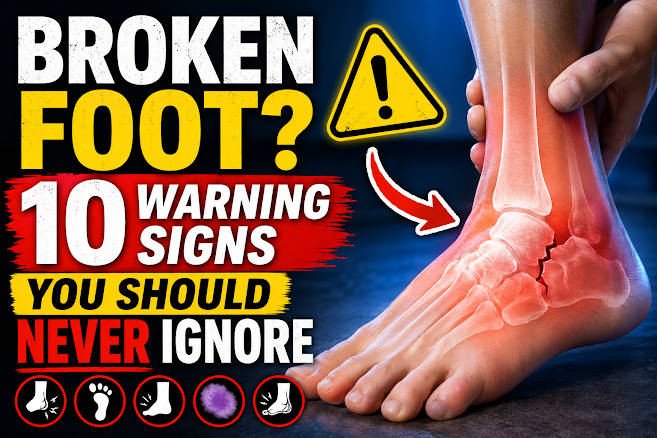
A broken foot is more common than many people realize. Whether it happens during sports, a fall, a car accident, or even from simply missing a step, a foot fracture can seriously affect your mobility and daily life. Ignoring the symptoms can lead to long-term pain, improper healing, and complications that may require more extensive treatment later.
Knowing the warning signs early can help you seek medical attention before the injury becomes worse. Here are 10 important signs of a broken foot you should never ignore.
Pain is usually the first sign of a broken foot. While sprains and bruises can also hurt, fracture pain is often sharp, intense, and worsens when you put weight on the foot.
If walking becomes extremely painful or nearly impossible, it may indicate a broken bone rather than a simple strain.
Rapid swelling after an injury is a major red flag. A broken foot often causes inflammation around the injured bone and surrounding tissues.
Swelling may:Persistent swelling should always be evaluated by a medical professional.
Deep bruising around the foot or toes can signal internal bleeding caused by a fracture. The skin may appear:
Bruising that continues to spread over the next 24–48 hours may indicate a significant injury.
One of the clearest signs of a broken foot is the inability to stand or walk normally.
If you:
…it’s important to seek medical attention immediately.
A foot that looks misshapen or out of alignment may indicate a severe fracture.
Warning signs include:
Visible deformities require urgent medical evaluation.
If even light pressure causes sharp pain, the bone may be fractured.
Broken bones are often highly sensitive around the injured area. Tenderness that remains severe after several hours is not normal and should not be ignored.
Many people report hearing or feeling a “snap,” “crack,” or “pop” at the moment the injury occurs.
While not every fracture produces a sound, hearing one during impact can be a strong indication of a broken bone.
A serious foot fracture can affect nearby nerves and blood flow.
Watch for:
These symptoms may suggest nerve involvement and should be assessed quickly.
Minor injuries often improve after resting, icing, and elevating the foot. A broken foot usually continues to hurt even after several hours or days.
If pain remains severe despite home care, it’s time to see a doctor for imaging tests like an X-ray.
Limited range of motion may occur when a fracture affects the joints or surrounding tissues.
You may notice:
Restricted movement combined with swelling and pain can strongly suggest a fracture.
If you suspect a broken foot:
A healthcare provider may recommend X-rays, a cast, boot, crutches, or in severe cases, surgery.
A sprain affects ligaments, while a fracture involves the bone itself. Both injuries can cause swelling and pain, but fractures are more likely to cause:
Only a proper medical evaluation can confirm the diagnosis.

is a senior consultant Best Foot and Ankle Specialist in Kondapur He has excelled during his training with a university gold medal and completed his fellowship training in Joint replacement and Foot and Ankle surgery from USA.
Hip and Knee Fellow (Australia)
flat no. 101, SS plaza, opposite APARNA TOWERS, Hanuman Nagar, Kothaguda, Kondapur, Hyderabad, Telangana 500084
+91 8328504271
© Dr. Aditya Somayaji. All rights reserved.